Small Bitcoin Withdrawals Can Leave You With a Bigger Fee Later
Withdrawing every small Bitcoin purchase to your own wallet can make a later payment more expensive. Each withdrawal can leave a separate piece of Bitcoin for your wallet to spend, and combining lots of pieces takes more transaction data.
Self-custody still has a purpose. But the exchange’s withdrawal charge isn’t the only cost to consider.
Your balance is made of separate outputs
An unspent transaction output, or UTXO, is an amount of Bitcoin available to spend. Your wallet adds these amounts together to display a balance. The Bitcoin developer guide explains that each transaction input spends a previous output.
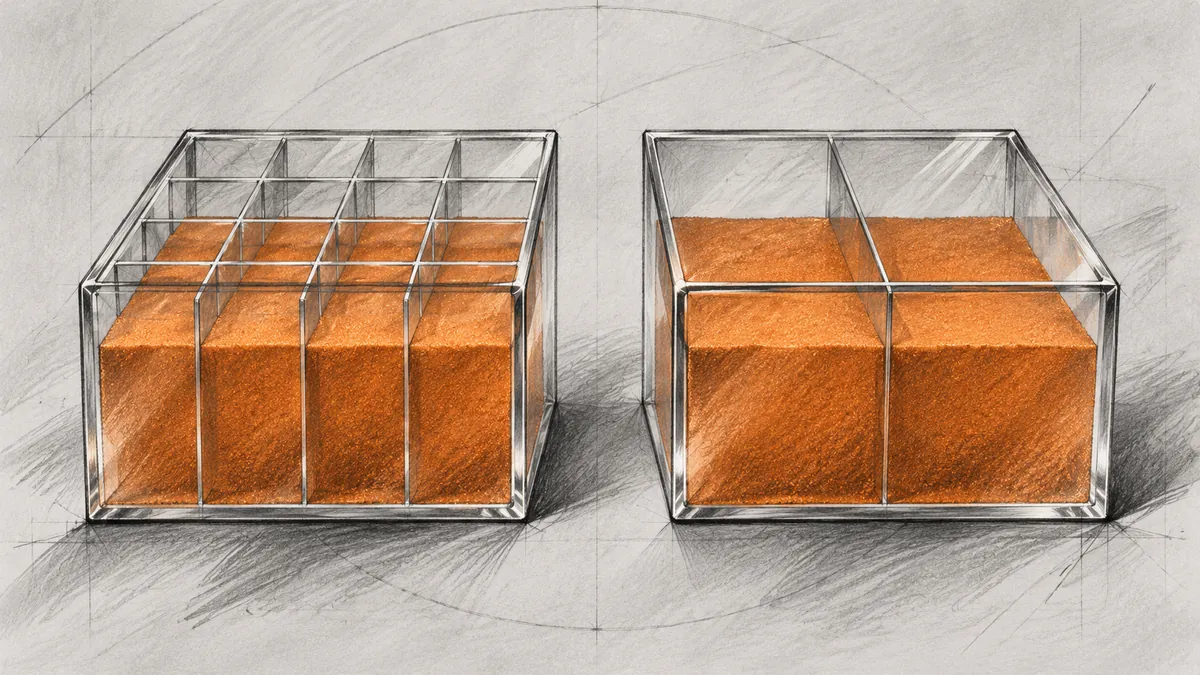
Imagine receiving 20 withdrawals of 0.001 BTC each. If each gives you one output and you haven’t spent any, your 0.02 BTC balance consists of 20 UTXOs. Someone who received 0.02 BTC in one output has the same balance in a different form.
To move the entire balance, the first wallet needs 20 inputs; the second needs one. Assuming comparable input types, the first transaction takes more space and costs more at the same fee rate. It won’t necessarily cost 20 times as much: outputs and other transaction data also contribute.
A smaller payment may use only some of your UTXOs. You don’t pay to include every coin just because it’s in the wallet.
Consolidation pays one fee to change the next transaction
Trezor’s UTXO guide describes consolidation as sending multiple outputs to yourself to create a larger one. Doing this during a low-fee period can reduce the number of inputs needed for a later payment.
You pay for that consolidation transaction now. The potential saving depends on what you’d otherwise spend later and the fee rates at both times; a smaller UTXO count alone doesn’t prove you’ve saved money.
If you expect to spend those coins together, compare the consolidation fee with the likely future cost. If you don’t have a reason to combine them, leaving them alone is a reasonable choice. Tidiness isn’t much of an investment thesis.
Combining coins also combines their histories
Trezor’s coin-control guidance warns against merging coins from different sources indiscriminately. Spending them together exposes a connection on the public blockchain.
For example, combining a publicly identified donation with an exchange withdrawal can associate savings with that public address. Sending the combined amount to a fresh address doesn’t erase the earlier transaction.
Coin control lets you select which outputs to spend. Labels help you remember where they came from, so you can avoid joining histories you intended to keep separate.
Before consolidating, review the selected inputs, destination and total fee in your wallet. Use an address you control and verify it on your hardware device if you’re using one. A low fee is a reason to consider the transaction, not a reason to merge everything.
For future purchases, separate the buying schedule from the withdrawal schedule. Less frequent withdrawals can leave fewer outputs, but waiting also leaves more Bitcoin with the exchange. Choose a balance you can tolerate there; don’t extend that exposure indefinitely just to save a network fee.