Why Your wstETH Balance Doesn't Increase
Holding 1 wstETH can still leave you with 1 wstETH months later. That alone doesn’t mean your staking rewards have stopped. Each token can represent more stETH while the number in your wallet stays unchanged.
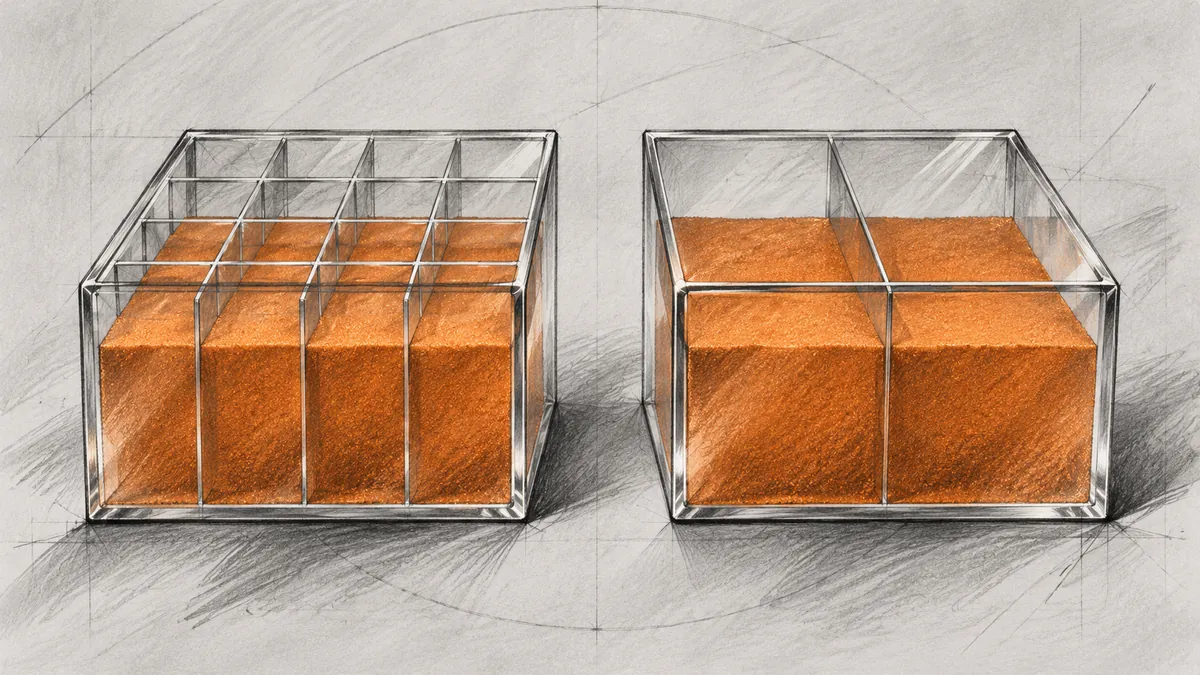
Lido offers two ways to hold the same underlying staking exposure. stETH adjusts your token balance; wstETH changes the amount of stETH represented by each token. Wrapping changes the accounting, not the source of the staking rewards.
The earlier liquid-staking introduction explains the general idea of a token representing staked assets. With wstETH, the useful number to watch is the conversion rate.
Check what each token represents
Lido’s wstETH contract documentation defines stEthPerToken() as the amount of stETH corresponding to 1 wstETH. Multiplying your wstETH balance by that rate gives its stETH equivalent.
For a hypothetical example, suppose 1 wstETH represents 1.20 stETH when you acquire it and 1.23 stETH later. Your wallet still holds 1 wstETH, but its stETH equivalent has increased by 0.03, or 2.5%. These are illustrative conversion rates, not today’s rates or a promised return.
You don’t need to unwrap periodically to collect that increase. Unwrapping converts the wstETH into the corresponding stETH at the conversion rate then in effect. It doesn’t pay an additional reward on top.
This also explains why comparing 1 wstETH with 1 stETH is misleading: they’re different-sized units of the same underlying exposure.
A rising conversion rate can coexist with a falling dollar balance
Suppose that hypothetical position goes from 1.20 to 1.23 stETH, while the market price of stETH falls from $3,000 to $2,400. Its indicative value falls from $3,600 to $2,952 despite the increase in stETH equivalent, before trading costs.
That’s an 18% dollar loss alongside a 2.5% increase in the amount of stETH represented. A wallet’s dollar display blends those effects together.
Even the conversion rate isn’t guaranteed to rise. Lido’s token integration guide describes positive and negative rebases: validator penalties can reduce the underlying balance. Wrapping doesn’t remove that exposure.
Unwrapping and selling answer different questions
Unwrapping answers how much stETH your wstETH represents. Selling answers what someone will pay for it now.
Lido’s withdrawal explanation distinguishes the protocol queue from secondary-market trading. A protocol withdrawal takes time; a market sale depends on available liquidity and the quoted price. Neither the wstETH token count nor its stETH conversion rate tells you the exact ETH proceeds of an immediate sale.
Before deciding rewards are missing, check the token and network, compare the conversion rate across your holding period, and account for any transfers. If you’re planning to exit, check the actual quote and costs separately.